

James Fitzpatrick
CEO of Boden Group – Specialist recruiters for the Facilities Management industry.
ai in facilities management roles
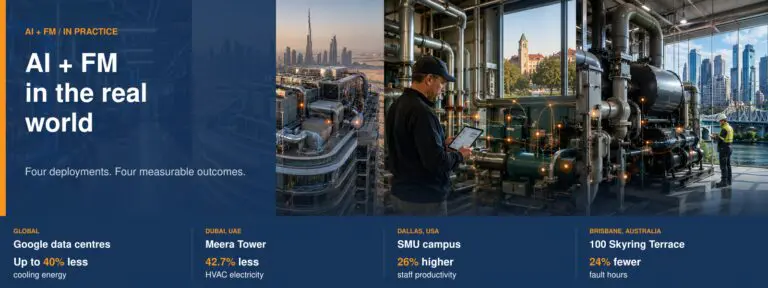
Quick Summary: Artificial intelligence is shifting from futuristic theory to everyday reality within modern facilities management (FM) systems. Rather than replacing entire teams, AI is automating repetitive administrative processes and analytical burdens, allowing human professionals to focus on workplace experience and strategic operations. This article explores original findings from a recent FM leadership round table, looking at real-world tool adoption, building automation trends, and the future of human talent. While permanent roles face rigorous approval chains, boards are increasingly turning to interim talent not because they can’t find permanent staff, but because they want total control over their fixed costs in a fluctuating economy.
August 14, 2026

The Key Question asked is: Will AI Replace Facilities Teams?
The short answer is definitive: AI will not replace facilities teams but facilities teams using AI will replace those who don’t.
While the global facility management AI market scales toward £10 billion ($12.4 billion) and over 52% of organisations actively leverage technology to automate workflows, the role of the human professional remains paramount. To understand how this plays out on the ground, ahead of our round in september 2026 james asked 3 of our expert guests some questions about the intersection of technology and the workforce.
1. Do your FM teams use AI systems in day-to-day operations?
The Finding: 100% of the panel (3/3) confirmed that they or their teams actively use AI systems in their daily workflows.
What it means: AI is no longer an experimental concept restricted to tech-heavy sectors. Routine analytical tasks, energy tracking, and service logging are now heavily supported by automated platforms.
2. Will AI monitors become more deeply integrated into building systems over the next 18 months?
The Finding: 67% of experts (2/3) stated yes, predicting a significant leap in deep integration over the next year and a half.
What it means: Smart building infrastructure is moving from isolated sensor tracking to unified, predictive ecosystems that flag mechanical issues and optimise energy use before human intervention is even required.
3. Will AI have the power to replace key FM roles?
The Finding: The consensus from our panel was a clear warning against over-automation. As one expert noted:
“Certain assets have successfully integrated robotics and automated occupancy analytics. Yet, looking at the wider workplace experience trend, clients are looking for human touchpoints. Technology streamlines the infrastructure, but people are the core driver of an office environment that feels supported and alive.”
What it means: While AI can handle data, logistics, and physical automation, it cannot replicate the human touch required for tenant engagement, workplace culture, and complex, creative problem-solving.


Clearing Routine Admin, Elevating Technical Expertise
One of the most persistent fears surrounding workplace automation is the spectre of mass redundancy. However, in an operational discipline as nuanced and human-centric as FM, the impact of AI is primarily about relief rather than replacement.
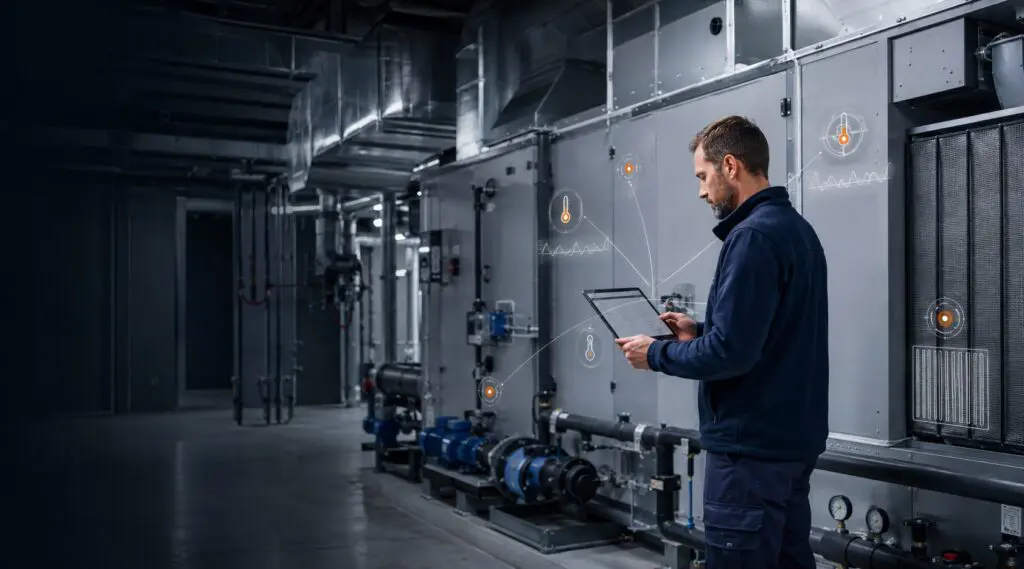
From Reactive to Predictive: Instead of waiting for a critical asset to break down, AI-driven analytics integrated into modern FM systems process real-time sensor data to predict equipment breakdowns weeks in advance. This shifts teams away from daily firefighting and toward planned, proactive work.
Removing the Paperwork Mountain: FMs spend hours on routine admin sorting rotas, checking compliance logs, logging service requests, and chasing invoices. Generative AI and automated workflows absorb this busywork, freeing professionals to focus on sustainability targets and space planning.
Amplifying Human Capabilities: AI cannot negotiate with a concerned tenant, lead a workplace experience project, or troubleshoot an unexpected site issue. Instead, it acts as a smart co-pilot, serving up data so human experts can make better decisions, faster.
The New Skill Profile: What Employers Are Looking For
As technology changes the daily routine, the profile of the ideal FM professional is evolving. There is a clear surge in demand for data literacy alongside traditional hard technical skills. Companies aren’t just looking for people who understand building systems; they want leaders who can read energy dashboards, work smoothly with IT departments, and guide teams through change.
The real challenge isn’t a lack of jobs—it’s a widening skills gap. To stay competitive, organisations must focus on upskilling, turning legacy teams into digitally confident operational leaders.
Frequently Asked Questions (FAQs)
Is AI replacing facilities management jobs?
No. Industry research and expert round tables show that AI is primarily taking over repetitive administrative tasks, scheduling, and data analysis, leaving human professionals free to focus on strategic management and workplace experience.
How are FM teams using AI right now?
Facilities teams use AI for predictive maintenance, automated work-order routing, energy optimisation through IoT sensors, and compliance tracking.
What skills do facilities managers need in the age of AI?
Beyond traditional technical building knowledge, modern employers look for data literacy, change management capabilities, and the ability to interpret automated analytics dashboards.